There’s a moment every deer hunter knows — it’s 22°F at 5:30 AM, you’ve been in the stand for two hours, and the cold has crept past your outer layer and started working on your core. You can’t move. You can’t stomp your feet. A shooter buck is somewhere in those woods and the only thing standing between you and a clean shot opportunity is your ability to sit still, stay focused, and stay warm.
That’s a layering problem. And it’s 100% solvable before you ever leave the truck.
The three-layer system has been the cold-weather standard for serious hunters and backcountry athletes for decades. Here’s how to build it right for whitetail season.
Why Layering Beats a Single “Heavy” Coat
The instinct is to grab your thickest coat and call it good. The problem: a single heavy coat can’t adapt to changing conditions, and hunting involves a lot of condition changes — a fast hike to your stand, sitting motionless for three hours, climbing down, dragging a deer.
A proper layering system gives you:
- Moisture management — sweat pulled away from your skin before it chills you
- Insulation — trapped warmth that you can vent when you’re moving
- Protection — a weather barrier against wind, rain, and snow
- Scent control — the right fabrics minimize your odor signature
Miss any one of these layers and the system breaks down.
Layer 1: The Base Layer — Your Most Important Purchase
The base layer sits against your skin. Its sole job is moisture management — pulling sweat away from your body so it can evaporate instead of chilling you.
Merino wool is the gold standard. Here’s why it beats synthetic base layers for hunting:
- Natural odor resistance — merino wool has antimicrobial properties that suppress bacteria growth. You can wear it for multiple days without it going rank. For hunting, that means less scent for deer to pick up.
- Temperature regulation — merino is genuinely warm when dry and retains meaningful warmth even when damp. Synthetics lose insulation value when wet.
- Non-itchy — modern merino (18.5 micron and finer) is soft enough to wear directly against skin all day without irritation.
- Silent — merino makes zero noise rubbing against your outer layers. Polyester and nylon can crinkle.
What to look for in a hunting base layer:
| Spec | Cold Weather (20–40°F) | Extreme Cold (sub-20°F) |
|---|---|---|
| Weight | 200–250 gsm | 250–400 gsm |
| Fit | Form-fitting, no bunching | Form-fitting |
| Coverage | Full length top + bottom | Full length top + bottom |
| Camo | Optional — won’t be seen | Optional |
Our Pick: Ridgeline Merino Wool Base Layer Set
Our Merino Wool Base Layer Set is built for hunters first. 100% merino construction at 240gsm hits the sweet spot for sit-all-day cold weather comfort, with flatlock seams that won’t dig in under a pack or harness, and a scent-resistant finish that extends odor control between washes.
Shop the Merino Wool Base Layer Set →
Layer 2: The Mid-Layer — Your Insulation Engine
The mid-layer is where most hunters go wrong. They grab a heavy cotton hoodie, a bulky down jacket, or worse — nothing at all. The mid-layer’s job is insulation: trapping warm air close to your body while still allowing moisture from your base layer to pass through.
Fleece is the hunting mid-layer standard for most sit-and-wait scenarios. Here’s why:
- Breathable — fleece moves moisture outward rather than trapping it
- Insulates when damp — unlike down, fleece retains warmth when wet
- Silent — quality hunting fleece is specifically engineered to avoid the brushing and catching noise that can blow a shot opportunity
- Packable — you can shed it during the hike in and clip it to your pack
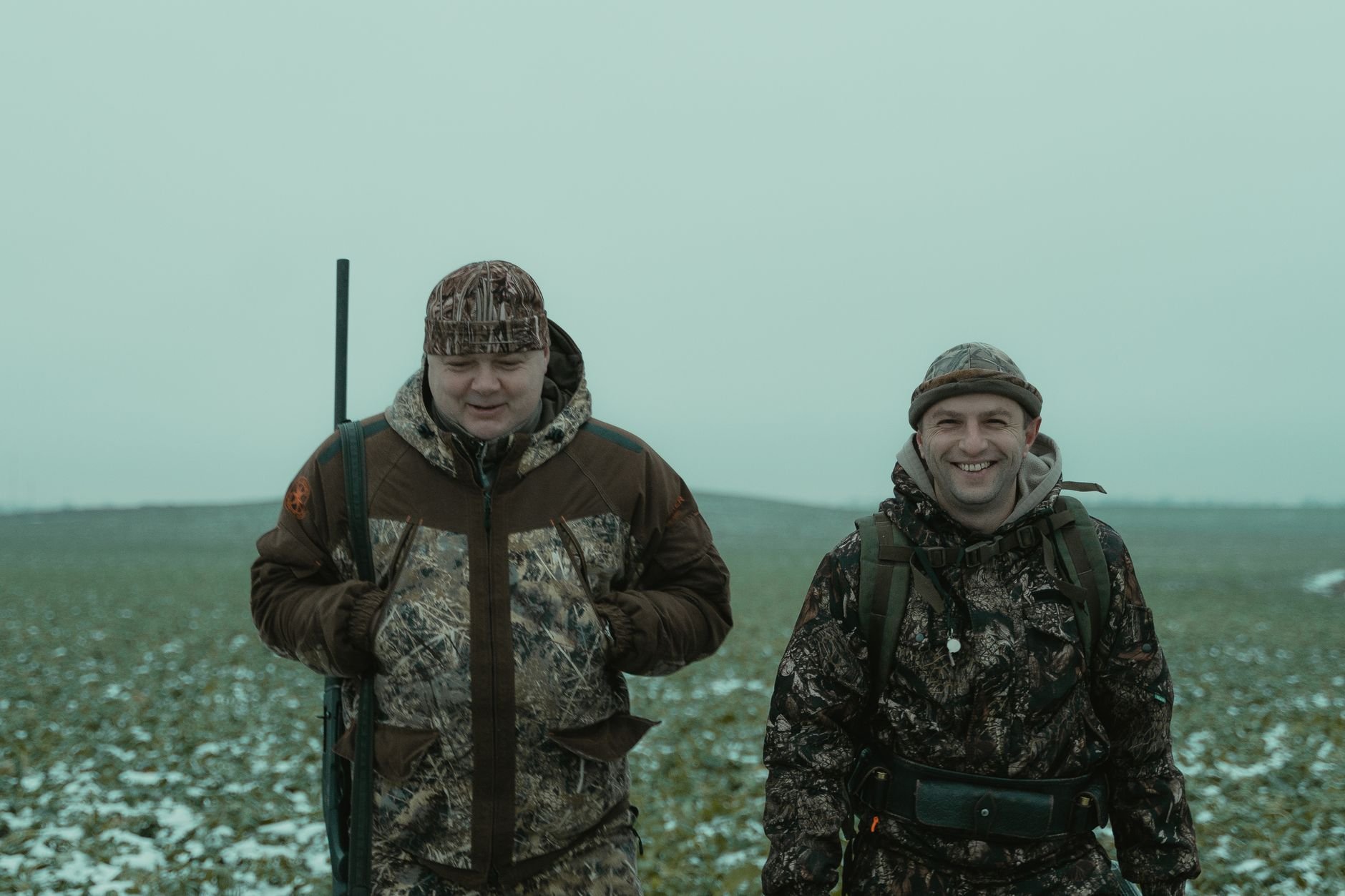
Mid-layer weight by temperature:
- 40–55°F — lightweight fleece (100-weight) or a softshell
- 25–40°F — mid-weight fleece (200-weight) — the most versatile option
- Sub-25°F — heavy fleece (300-weight) or an insulated mid-layer
Full zip vs. half zip vs. pullover: Full-zip wins for hunting. You need to be able to vent rapidly when you come off a hard trail push and you’re about to climb into your stand. Sitting in a wet mid-layer because you can’t vent it is a rookie mistake.
Our Pick: Ridgeline Camo Fleece Mid-Layer Jacket
Our Camo Fleece Mid-Layer Jacket is 300-weight brushed fleece with a full zip and two deep hand pockets. The camo pattern works as a standalone in mixed hardwoods and as a visible mid-layer for layered early-season setups. Quiet, warm, and built to work with a pack.
Shop the Camo Fleece Mid-Layer Jacket →
Layer 3: The Outer Shell — Your Weather Barrier
The outer layer blocks wind, rain, and snow. It does not need to be heavily insulated if your base and mid-layers are doing their jobs — in fact, an over-insulated outer layer is a common mistake that leads to overheating on the way in and soaking your base layer.
What to look for:
- Waterproof-breathable membrane (not just water-resistant — look for fully taped seams)
- Windproof — even a light wind cuts through fleece at 20°F
- Quiet fabric — waxed canvas and soft-shell materials beat stiff hardshell for spot-and-stalk
- Scent control treatment — some shells include activated carbon or silver-ion treatments
- Camo or neutral — your outer layer is what deer see
Insulated shell vs. non-insulated shell: For most sit-style hunting in the 20–40°F range, an insulated shell works well. Below 20°F or for highly active hunting, separate your insulation (mid-layer) from your weather protection (outer shell) so you can manage each independently.
Our Waterproof Hunting Rain Shell and Insulated Hunting Vest pair well together as a modular outer system — the vest adds core warmth without restricting arm movement for the shot.
The Complete Cold-Weather Hunting System
Here’s how the full stack looks in practice:
| Condition | Base | Mid | Outer |
|---|---|---|---|
| 35–50°F, dry | Merino 200gsm | Light fleece | Softshell |
| 20–35°F, dry | Merino 240gsm | 300-weight fleece | Insulated shell |
| 20–35°F, wet | Merino 240gsm | 200-weight fleece | Waterproof shell |
| Sub-20°F | Merino 400gsm | Heavy fleece | Insulated shell + vest |
The cardinal rule: Dress for the stand, not the walk. You should feel slightly cold walking to your stand — if you’re comfortable at the trailhead, you’ll be sweating by the time you climb in, and that sweat will chill you within the first hour.
Don’t Forget: Extremities and Scent Control
The layering system covers your core, but your hunt can still fall apart at the edges.
Hands: Cold hands make for a bad shot. Merino liner gloves under a waterproof outer glove give you dexterity when you need it. Our Merino Wool Beanie & Glove Set covers both head and hands.
Feet: Wool socks + an insulated waterproof boot rated 200g or higher for all-day sits. Don’t over-insulate your boots for active hunting — your feet will sweat and freeze.
Scent control: Merino’s natural odor resistance buys you time, but still store your hunting layers in a sealed bag with earth-scent wafers. Spray down with scent eliminator before the walk in. Layer management keeps your clothes drier, which means less scent off-gassing over the course of a sit.
The Bottom Line
A cold-weather hunting setup isn’t about finding the warmest single garment — it’s about building a system. Merino base layer locks in moisture management and scent control. A quality fleece mid-layer delivers adjustable insulation. A waterproof outer shell seals everything against the weather.
Get this stack right and you’ll sit longer, stay more focused, and put yourself in position for more shot opportunities as the temperature drops.
Shop Hunting Apparel at Ridgeline Supply Co. →
Ridgeline Supply Co. participates in affiliate programs with Amazon, OpticsPlanet, and Cabela’s. When you click our affiliate links and make a purchase, we may earn a small commission at no additional cost to you. We only recommend gear we’d use ourselves.